How The Dyscalculia/Maths Difficulties Impact on Teaching And Support
In order to help children with dyscalculia learn maths, our approach to teaching maths has to change. Judy Horingold developed a holistic approach (Hornigold, 2017) to understanding the learner in order to help learn maths. She claims that we as teachers do not teach real relational maths but rather transactional because that is how we were taught it as well. She acknowledges the difficulty of maths as a subject, such as reliance on memory instead of understanding and speed and accuracy instead of showing thinking. Additionally, culturally, we have made it acceptable to say that one is “bad at maths”. These pressures of accuracy, speed, added to mostly working without sharing with others and individual competition give grounds for maths anxiety, which hinders maths learning. Horingold’s first foundational principle is to create a safe environment for all children to learn maths where mistakes are opportunities to learn. Apart from psycho-educational techniques, Hoernigold suggests specific maths teaching methods, such as developing number sense. Maths has to be connected to context and we have to encourage learners to explain their thinking. She points out that number talks are very effective (Hornigold, 2017) and they should provide opportunities for multiple solutions and working the solutions mentally. As a practitioner, aware of common comorbidities, Horigold suggests that making maths Meaningful, Multisensory, Manageable and Memorable[1] (Hornigold, 2017, 108) will help learners with dyslexia. While verbalisation, spacing out problems on paper, special seating arrangements and use of tactile resources will benefit learners with dyspraxia.
Steve Chinn’s approach (Chinn, 2019), coincides with Horingold’s approach to teaching. He also points out comorbidities and increasing awareness of them as well as the nature of teaching maths that creates maths anxiety. Additionally, he points out inconsistencies in maths which can be in terms of the use of vocabulary and early arithmetics stemming from teacher explanations. Just like Horingold he stands by over-reliance on memory capacities and algorithms in teaching maths. To combat this, he insists that every teacher should teach meta-cognition, or thinking about thinking. Every chapter in his book has support for vocabulary, concepts, meta-cognition and things to practise.
Chinn claims that every learner’s way of doing maths is either fast, intuitive, flexible, without showing work (a grasshopper) or procedural, formulaic, seeing only one way to solve a problem (an inchworm). He claims that in order to be a successful maths learner, each type of the learner has to learn ways of the other and use the two styles interchangeably depending on the situation. However, if a learner is not flexible then the teacher has to fall back on the mantra, “Teach the child as he is….” (Chinn, 2019).
Chinn has illustrated every concept in his book with patterns. He asserts that patterns are developmental and can be used at any level of learning. They can help develop a basic concept into a more complex one, connect the concepts and show where “it has come from”.
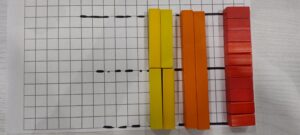
Apart from metacognition and teaching with consistent patterns, there is another tool that both Chinn and Horibgold are i[2] s a proponents of – manipulatives. He claims that every classroom should have a maths kit available (Chinn, 2019), so that learners will establish connections between “bricks” and “the numbers”.
While Horingold and Chinn have some differences in their approaches, they both state that making maths as least anxiety-provoking as possible, developing number sense, using tactile and visual resources to make consistent models of concepts and teaching learners meta-cognition lay the foundation of maths learning, especially for learners with maths difficulties. [3]